Sunday, 6 January 2013

Hakeem kae-Kazim and Fana Mokoena: Actor's Actors


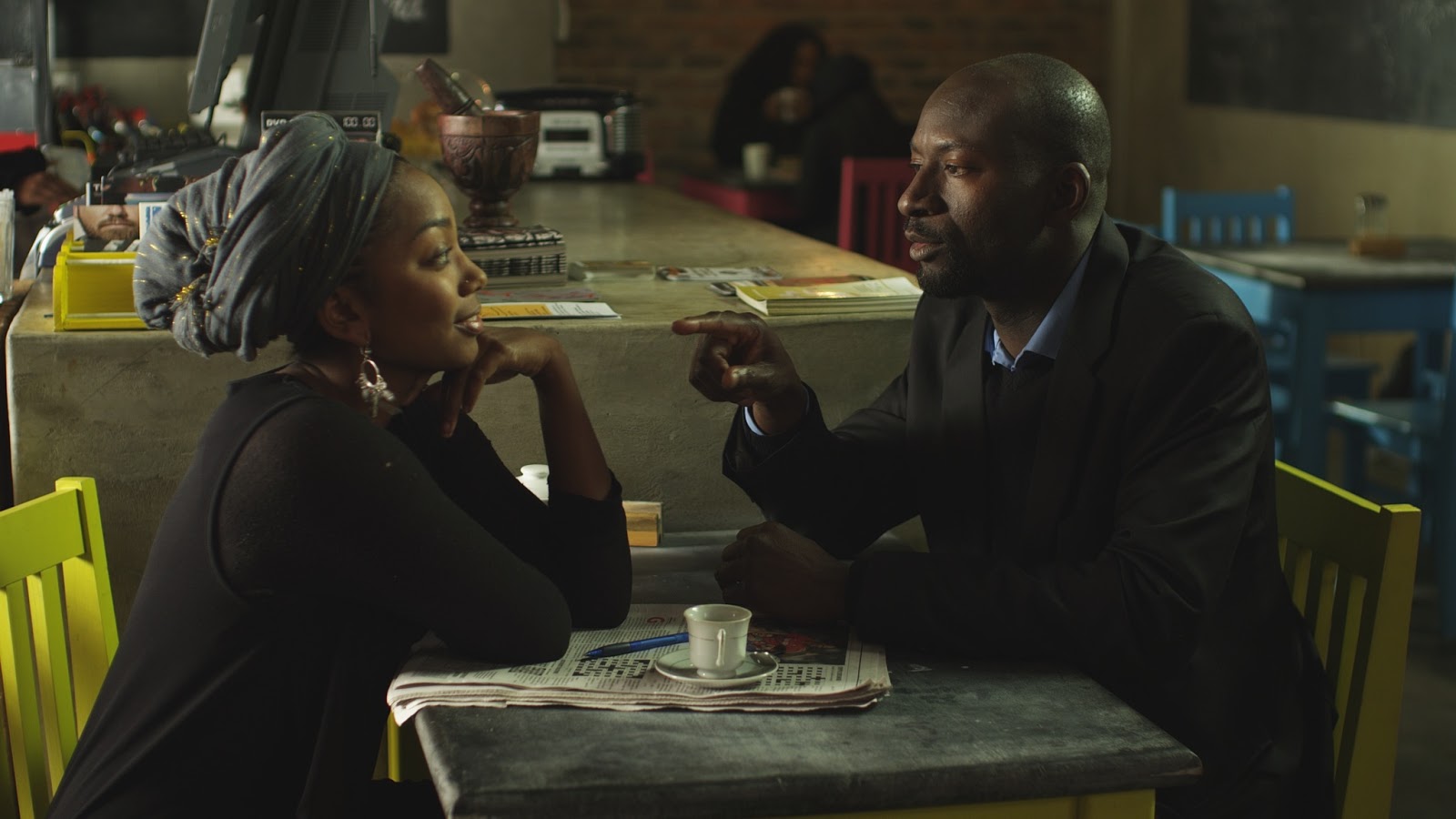
Hakeem kae-Kazim (Ade) and Fana Mokoena (Timothi) first went head to head in Terry George's Hotel Rwanda and shone again in Rolie Nikiwe’s  Inside Story.  In Man On Ground, they illuminate the screen. Both were nominated at the African Movie Academy Awards with Fana taking home the Best Supporting Actor Award. They are what I would call Actor’s Actors - actors that other actors love to watch.

Thursday, 3 January 2013

Who Took That Picture?


That's a question I've been asked whenever anyone sees The Poster. I never had a concept of what the poster would be. We had toyed around with a few ideas but nothing concrete. Christopher Grant Harvey, our DIT/Data Wrangler, had been collecting frame grabs from the shoot, and he would send them to me at the end of the day to view. Amongst them was this shot of Femi (Fabian Adeoye Lojede) as he walked through the pigeons. Of all the images, it seemed to capture one of the themes of the film: longing to be free. In that moment as the pigeons fly up past him, Femi is free. Months later, Hakeem kae-Kazim and I stood at the back of the cinema in Washington watching the film. Man On Ground was the opening night film at The Smithsonian African Art House Film Festival, and when the scene came up on screen, he leaned to me and whispered: “That should be the poster”. He was right. It was one of those images that the Film Gods had blessed us with. 


Wednesday, 2 January 2013

My Cameo In Man On Ground


The cameo was supposed to be a sneak peek at characters from my next film Tell Me Sweet Something. Lindiwe Matshikiza plays the lead, a young writer called Moratiwa and I play her publisher. The scene never made it to the final cut of Man On Ground. You'll hear more from Moratiwa soon.

Thursday, 15 March 2012

The Great Cast of Man On Ground

                                          Hakeem kae Kazim

                                           Fana Mokoena


                                          Fabian Adeoye Lojede


                                         Makhaola Ndebele

                                         Bubu Mazibuko

                                         Thishiwe Ziqubu

                                         Mandisa Bardill


The Man Dies


Filmmakers in this country have always had a response to xenophobia. 


I just want to take time to give a shout out.

The Burning Man directed by Adze Ugah from the

Thursday, 16 April 2009

The Man With The Vacant Eyes

Carla Prinsloo, our researcher, conducted a series of interviews with displaced immigrants. The participants agreed to be interviewed provided that we never used their images or their real names.

Carla interviewed everyone from an 8 year old Somalian boy who aspired to be a policeman when he grew up to an ex military man who spoke about the inconsistencies between government policy and action. One man’s story stayed with me deeper than the others.  It was of a young man who had only been in South Africa for a month (coming to join his father in a spaza shop) when the riots broke out. When his father tried to sneak back to the looted shop to ascertain if there was anything to salvage, his father was shot in the head. He carried a very graphic autopsy photo in his breast pocket.

The picture Carla took of him was haunting. His eyes were bloodshot, but not with rage or resentment. His mouth slightly open. I kept his picture close to me. Carla had captured his bereavement in that one image. His grief was so strong, that from the look in his eyes I knew his father. During the writing process I often returned to this picture of this man: staring into the distance, staring at a future bleak and lonely. 

Friday, 6 February 2009

Setswetla - We Will Always Have A Choice


The first step was to let the information osmose. We did not know at the time what our story would be, but didn’t worry as we knew that The Research was going to inform the direction we would take.

The process was slow. Fabian and I would meet up anywhere; at his place or mine, the nearest mall and even a car park and toss ideas around. Skype allowed us to communicate with Hakeem from his base in L.A. Sometimes we would plot out a story, only to change it the following day. However, whichever draft of the story we came up with, the idea of a ‘search’ was always present.

The photographs Alon Skuy took of the riots were arresting. They spoke of a menace that lurked within the frame and outside the frame. I wanted the film to have this sense of peril. 

The first book I read was Go Home Or Die Here published by the Wits University Press. One of the chapters in the book by Noor Nieftagodien entitled “Xenophobia In Alexandra” shaped one of the themes for me. Noor writes:

A key moment in the conflict, and perhaps a turning point, was when a group of attackers marched to Setswetla to launch a raid against the African foreigners living there. When they arrived at the squatter camp, the would-be attackers were met with resistance from local residents…Although this was the most resolute example of resistance against the xenophobic attacks, there were countless other instances of local organizations taking very public positions against the violence.”

This had not been widely reported. This got me thinking of the choices we make as human beings. One set of people can choose to set an innocent man alight and another set of people will defend the innocent to their last breath. These choices would be what the characters in Man On Ground would grapple with.